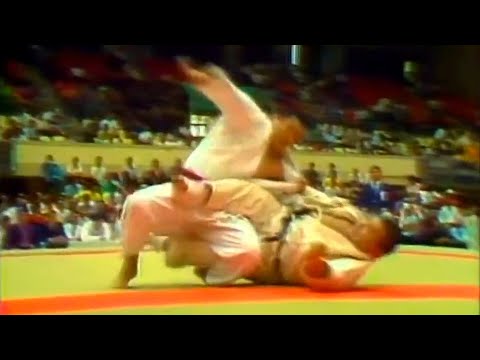
Kani Basami (scissor takedown) – Kōdōkan Jūdō
⛩️ Source
This video is part of the Kodokan × IJF Academy “100 Techniques” series, a joint educational project presenting a standardized, officially endorsed technical curriculum that unites classical Kodokan Jūdō with modern international practice.
🔖 Technique Notes
Kani basami, or the “crab scissors,” is a yoko-sutemi-waza (side sacrifice technique) leg attack in which Tori drops sideways or backward while scissoring both legs around one of Uke's legs to topple them, rotating the opponent to the mat. This technique must be practiced with great caution because it subjects the opponent’s knee and ankle to significant lateral and rotational stress, and even minor mistakes in timing or leg placement can drive uncontrolled force through a planted limb; as a result, the scissoring motion combined with the fall can generate severe torque on weight-bearing joints, leading to serious injuries such as ACL or MCL tears, fractures, or catastrophic knee dislocations. Due to many injuries in competition, this technique has been banned from Jūdō competitions since the early 1980s following a high-profile injury at the 1980 All-Japan Championships, where Yasuhiro Yamashita suffered a broken leg from kani basami, and it is now classified as a kinshi-waza (forbidden technique) under current International Jūdō Federation rules.
Advanced navigation tools (graph & deep research).